Harvest planning / Field notes
Make a season of it.
Do you want a bowl of berries over many weeks, or a concentrated crop for preserving? Start with the kind of harvest you want to manage.
Research-based guide · Original notes checked September 5, 2026
Planning reference reviewed September 6.
About the research and AI assistance
The planning reference
Read the season as a sequence.
Field guide / 2026
Source-led, region-aware
A New Jersey reference, drawn from Rutgers’ cultivar table (2005). Each position is an order category, not a month, week or duration. Varieties within a category are not ranked against one another.
Early
Late early
Midseason
Late midseason
Late
Very late
Source: Rutgers FS419, cultivar table ↗
Bluegold is late in this table but midseason in its nursery listing. See the difference ↗. Do not merge this sequence with calendar dates from another region, or use it to certify bloom overlap.
01
Work in relative seasons first
“Early” is useful when comparing plants observed in the same region. A June date from a nursery and an Oregon trial’s relative season are not interchangeable. Weather can also shift picking from one year to the next.
Our catalogue keeps region-specific timing notes on each profile. Calendar-only supplier listings have their own filter category rather than being silently assigned a universal early or late label.
02
Sketch a northern shortlist
Duke, Bluecrop and Elliott offer an early, midseason and late starting shortlist in their cited descriptions. Chandler adds a reason to investigate a longer picking window. This is a planning example, not a guarantee of continuous fruit in every northern garden.
Before buying, replace the generic labels with dates from a local extension guide or experienced nursery. Check that all selected plants fit the site, and resolve bloom overlap separately.
Sources: Stark Bro’s: Duke blueberry ↗Stark Bro’s: Bluecrop blueberry ↗Stark Bro’s: Elliott blueberry ↗Stark Bro’s: Chandler blueberry ↗
03
Concentrated or spread out?
A household that likes to graze may appreciate returning to a plant over time. A household planning a dedicated jam-making weekend may prefer a more concentrated crop. Neither is universally better.
Ask who will pick while you are away, how much freezer space you have, and whether you can check the plants regularly. These answers are often more useful than choosing whichever cultivar has the largest advertised berry.
04
Keep a record that improves next year
- Cultivar and planting position.
- First open flowers and end of bloom.
- First genuinely ripe fruit, not simply first blue fruit.
- Peak picking week and last useful harvest.
- Weather events and any missed watering.
- How much of the crop you actually used.
Use this guide locally.
These are planning notes, not a promise of performance. Follow the original sources for their full regional context, and check advice from your local extension service before planting.
How we choose and interpret sources ↗Put the reading to work
Explore the varieties.
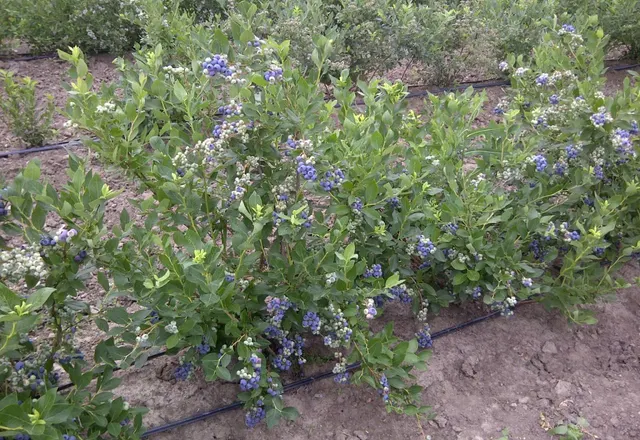
Duke
An earlier harvest
- USDA zones
- 4–7
- Height
- 4-6 ft
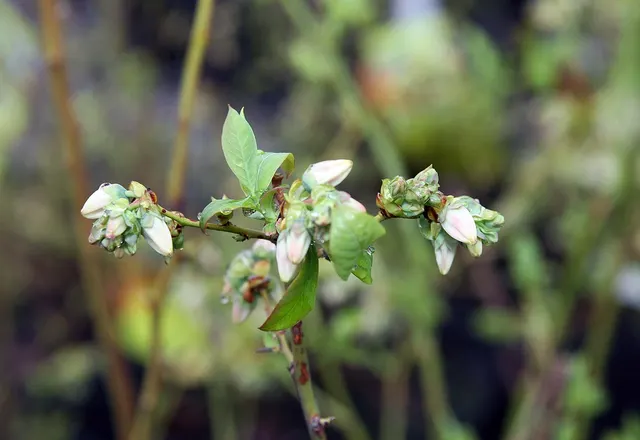
Bluecrop
A midseason staple
- USDA zones
- 4–8
- Height
- 4-6 ft
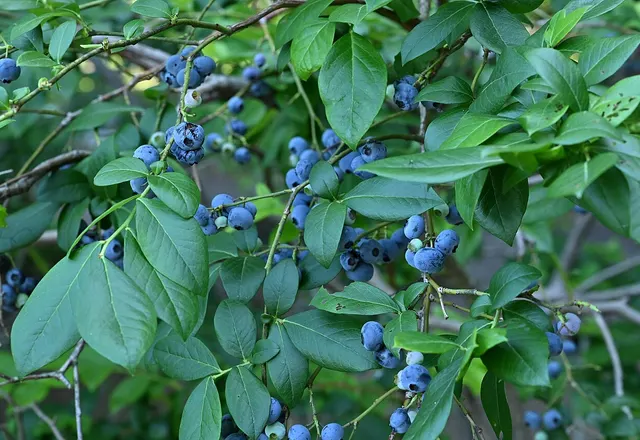
Chandler
Extra-large berries
- USDA zones
- 4–8
- Height
- 4-5 ft
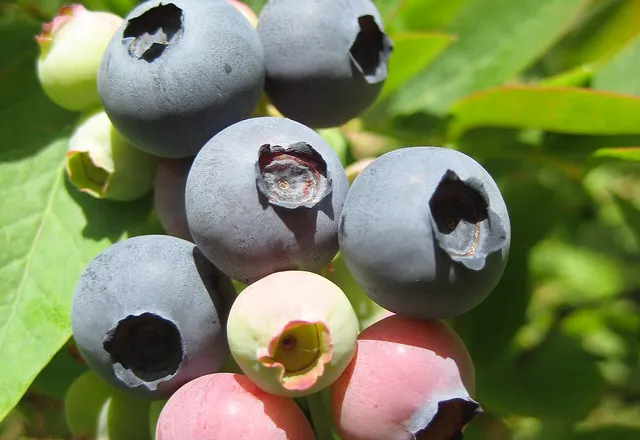
Elliott
A later picking window
- USDA zones
- 4–8
- Height
- 4-6 ft